Search A n R

Showing posts with label research. Show all posts

Tuesday, September 28, 2010

Germany 's Influence on World Cuisine - Beyond Beer and Sausages

Germany is known for its Oktober fest and the beer loving population. There is more to Germany and its cuisine. It may not be as popular as its snooty counterpart - French food!!...but the German Kitchens have contributed more than fair share to the world cuisine.

Interested in knowing more about German food??

If you thought German cuisine was nothing more than Beer and Sausages. Then you definitely need to see this episode of Planet food - Germany special!!

The n number of bread varieties and the desserts are to die for...If you have eaten Black forest cake and love it..It is good to know that it is from a region by the same name- Black Forest in Germany..Here is how its made...


youtube

PS: I am in the process of researching more on similarities and variants of vegetarian dishes from Germany (Oh yes! there are quite a few of them !!). I ll be back with a post soon :")

Tuesday, January 12, 2010

Italian all the way - Know your pasta!

I love pasta and to be specific, the whole grain and multi-grain variety. I cant tell you enough about my maida Phobia. I was introduced to different pastas during my Business School intership at Bambino Agro Ltd. For people who don't know, Bambino is a generic pasta/vermicelli brand in India. The project I worked on was their new product launches (Varieties of Pasta) (inventory management, raw material sourcing among a few other topics). Although international brands were available locally, they were too expensive for an average middle class kitchen pantry.

I have had my family members ask me questions about pasta ever since my internship...Being the pasta guru in the family ("smiles"), I have taken it upon myself to clear their doubts and provide well researched answers to their FAQs. Not that I am an expert, but yes, my research interests are a mixed bag. I love researching about food, among everything else. (Force of habit I guess.)

International vegetarian cuisine are always a draw for me. A small introduction to the shapes and their names would work well at this point.

We find pasta in long, tubular, spirals, rounds, and other fancy shaped varieties. Wiki mentions that pasta was introduced to Italy thanks to the silk route and European trade with china.

The varieties...
Spaghetti,  is the most popular pasta and works well with simple olive & tomato sauce due to its thin, round strand like shape. It is generally difficult to eat them with chunky veggies and sauces with meat chunks.
This is a whole wheat version.

Image source: all-creatures.org

Bucatini is a thick, round strand with a hole in the center

Image Source: stabroeknews.com


Conchiglie : Look like tiny shells

Image source: dkimages.com


Fettuccine :(look like a flatter versions of spaghetti)...


Image source: all-creatures.org

 Farfalle : Are the bow tie shaped pasta
Image source: wiki

LINGUINE  are flat, smooth strands of pasta and generally a preferred pasta in fancy Italian restaurants

Image source: culinariaitalia.files.wordpress

FUSILLI they look like drill bits or rather corkscrew :-) and look very pretty in a soup or a salad. Look at these lovely tri coloured fusilli
Image source: rgsrl.it

PAPPARDELLE are very similar to fettuccine, but are wider. they taste really good with strong sauces and flavours. However I have never seen them paried with white sauces or cream based sauces

Image source: pastafrescacarmelaocone.it


RIGATONI Ridged, tubular shape works with chunky sauces and baked dishes
Image source:all-creatures.org


PENNE is another very popular tube shape pasta which complements most sauces and ingredients; It is generally very chewy so holds up well in baked dishes.

Image source: wiki 


ORECCHIETTE are very cute cup shaped pasta which are good to go with a vegetable of your choice. This works well in string flavoured sauces
 Image source: dkimages.com
TAGLIATELLE looks similar to fettuccine, but is a wider and more substantial pasta served generally with meat and tons of vegetables and chunky sauces
 Image sources: wiki
Bavette is an imaginative version of Spaghetti as it is flatter and has a slightly convex shape. This helps them  capture a wide variety of flavours and also work well with lighter and delicate sauces as well.
 bavette
Image source:  culinariaitalia.wordpress.com

Orzo pasta is in the shape and size of a rice grain. Works well in a wide range of recipes, say in soups, salads and as side dishes served with meat or grilled veggies.
Image source: wiki
Vermicelli literally means little worms...works well in soups, sauces and is a great dessert ingredient...who doesnt love a bowl of yummy vermicelli kheer/payasam. :-). I make crazy varieties of main course wiht this pasta variety.>>here is the link to an earlier post
Image source: pristinefood.ca
While researching for shapes and varieties of pasta, I came across this comprehensive list here
Go pasta way, say once a week and enjoy your meal!!!

Sunday, January 10, 2010

Soba and other Japanese noodles ..YUM

Among the innumerable things we cook at home...Soba was on the menu during the weekend. I had an array of colourful veggies in the refrigerator and had a pack of these yummy Japanese noodles.

And, this yummy veggie delight had to happen.


Not only the Chinese cuisine, but the Japanese cuisine boasts of a decent spread of noodle recipes and varieties. Every variety I know of is made of buck wheat dough.

Know your noodle, the Japanese Style

Japanese noodles come in four forms, Ramen, Shirataki, Soba, Somen, and Udon


Ramen - The dough is kneaded with soda water to allow rising before the dough is pulled to form the noodle. Ramen is a thin noodle variety and is of Chinese origin. Ramen basically is a Japanese version (read corruption) of the name Chinese name"Jo mein" which translates to hand pulled noodles in Chinese. These noodles fluffy cos of the soda water and work well in soups. And this name has no connection to the brand Top Ramen...lol...

Then Japanese market has a wide variety of Ramen noodles, depending on the geographic location and the  in Japan.


Image source: z.about.com
Ramen soups are categorized by flavors and are mainly of four kinds
  • shio ramen (salt flavored soup), 
  • shoyu ramen (soy sauce flavored soup),
  • tonkotsu ramen (pork bone soup),
  • miso ramen (miso flavored soup). 
Regular Ramen toppings include leek, seasoned bamboo shoots, dried seaweed such as Kombu, grilled pork, boiled egg etc.

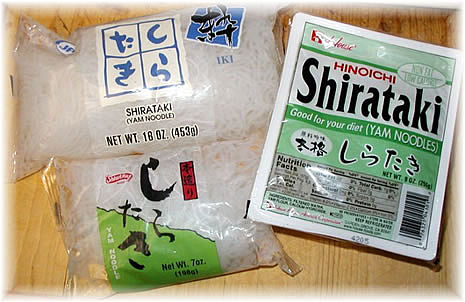
Shirataki - noodles with very low carbohydrates and calories made from a plant called Konjac plant. These noodles, also called Yam noodles, is wet packed and ready for use out of the packet. These noodles are said to have no bad carbs and are said to be a good form of starch in your diet.


Image source: oriental-marketplace.com
I also remember seeing Tofu Shirataki noodle in the Asian market. And it is said that this noodle variety has been gaining popularity in the USA. These noodles are great in salads, soups, and even desserts!

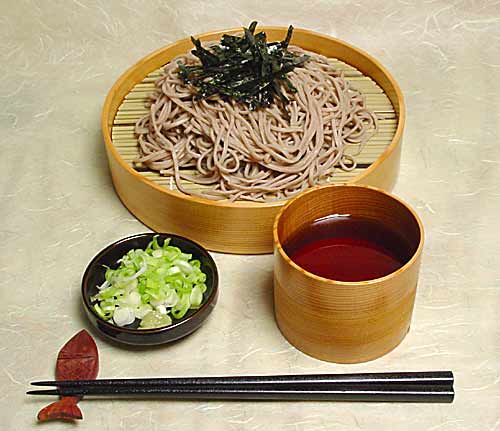
Soba  - This is the noodle variety I bought home this time. They are  medium sized, buckwheat-based noodles with uses in cold and hot recipes. These noodles are inexpensive and have been found to be served on local food stalls and road side cafe houses. Soba is quite starchy and tends to absorb flavours well.Ypu could have guessed this by the creamy texture of the bowl of Soba I made.

Image source: wiki
We find two major varieties of this noodle,
  • Sarashina soba: thin, light-colored soba, made with refined buckwheat
  • Inaka soba: "country soba", thick soba made with whole buckwheat
Types of dishes:
Cold Soba is served with a dipping sauce and is a summer favourite.Hot Soba soups are served in a broth and topped with vegetable of choice.

Image source:trekjapan.com

There are various varieties of Soba noodles based on regional preferences.Another very interesting fact about Soba is that in most regions of Japan, it is eaten during festive occasions and particularly on the New year's eve. As such Japanese are known for their extensive hospitality and as part of this culture, people welcome their new neighbors by giving out soba. Soba, when compared to pasta or bread, also scores high on content of amino acid.

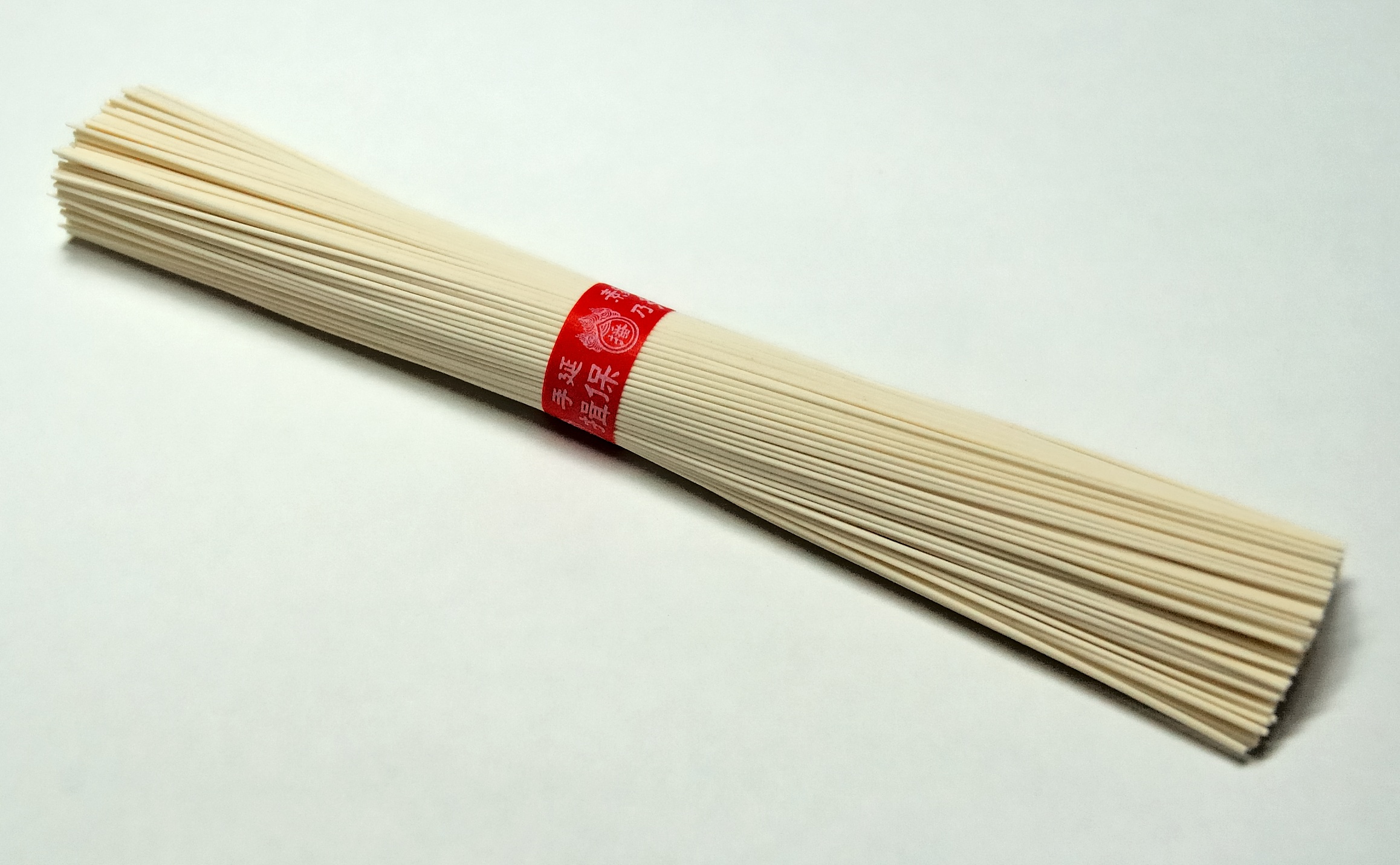
Somen - very thin, wheat-based noodles served cold with mildly flavoured dipping sauce and toppings. Although, winter calls for hot somen dishes (quite similar to ramen and Soba noodles)

Image source: wiki
It is better to cook these noodles in high heat (boiling is done similar to other pasta/noodle). Somen noodles work well in salads and stir fry.


Udon - thick, wheat-based noodles varitey which is hand rolled. It is best when served hot with dipping sauce and toppings. Cold serving recipes also exist for this noodle...the possibilities are endless!

Image source: wiki

Hmm...all this food talk has rats running in my tummy...let me enjoy this bowl of yummy Soba stir fried with red cabbage, red and yello bell peppers, onions and carrots. Tempered with ginger and green chillies and vinegar. Ah! divine.

Tuesday, January 5, 2010

Thiruvadhirai Kali and Kootu

Kali is a sweet rice recipe paired with Savoury Kootu on Thirvadirai. This festival was on Jan 1st this year.

Thiruvadirai is one of the 27 stars or the "Nakshathirams" of Hindu astrological calender.One specialty about this day is the sighting of - Arudra or thiruvadirai star, considered auspicious by hindus. The festival, Thirvadirai, is celebrated in the month of Marghazi (November-December), on the day considered to be the ascent of thiruvadirai star. (Each day in the calender is associated to a specific star -one among the 27 stars in a hindu calender). People offer a rice based sweet dish to Lord Shiva - as he is associated with the Arudra star. Other star is sravanam or Thioruvonam is associated with Lord Vishnu.

As part of the ritual, I made Thiruvadirai Kali and Mixed veg kootu for the day.

Kali with roasted almonds and raisins

You need: Serves 4
Raw rice (I use brown) - 1cup
Moong dal (with the skin)- 1cup
Jaggery - 1/2cup (vary the quantity to suit your requirement)
Shredded coconut - 2tbsp
Elaichi powder - a pinch
raisins - 2tbsp
Roasted almonds - 2tbsp (coarse crushed)
Ghee - 1/2 tbsp

Process
  • Dry roast the rice until it turns crisp and you sense a faint aroma..this would take a minute or so...make sure you do not roast for long..it may turn the rice tasteless
  • Roast the moong dal for a minute or less.
  • Coarse grind rice and moong dal (helps in cooking faster)
  • Soak jaggery in a cup of water and strain it to remove sand and dirt
  • Pressure cook (two whistles) - the rice and moong dal with this jaggery water, 2 cups of water and pinch of salt (you may skip the salt), elaichi powder
  • Heat ghee in a kadai and add your raisins and almonds and mix it with the contents in the pressure cooker. Garnish with shredded coconut
Basic difference between kali and Chakkarai pongal is that we dry roast ingredients for kali and use raw rice and dal for pongal.


Kootu
It is customary to cook a five or seven vegetable kootu for thirvadhirai. Odd numbers are considered auspicious in hinduism. This festive kootu calls for root vegetables ( I used roots vegetables and more!)

You need: Serves 4

Drum sticks - 2" pieces (say ten of them)
yellow pumpkin - cubed- 1/4 cup
Winter melon - cubed - 1/4 cup

Potato- cubed - 1/4cup
Yam (Suran)- cubed - 1/4 cup
Cucumber - cubed - 1/4 cup
Cluster beans - 1" pieces - 1/4 cup or less

Fresh Peas or pre soak dry peas - 2tbsp
Curry leaves - 8-9 
Salt
Hing/asafoetida - a pinch
Turmeric powder - a pinch

To Grind

Red chilliles/green chillies - 4-5
fresh coconut - shredded- 1/2cup
Cumin seeds -2 tsps
Corainder seeds - 1tsp
tamarind pulp - 3tsps
Chana dal - 1/2 tsp

Tempering
Mustard seeds- 1/2tsp
Cumin - 1/4 tsp
curry leaves - 4-5
oil - 1/2tsp

Process: 
  • Pressure cook all the vegetables with salt, turmeric powder and curry leaves
  • Roast corainder seeds, and chana dal grind them into a fine paste with fresh coconut, tamarind pulp, cumin, chillies 
  • Heat oil and temper mustard seeds, curry leaves and cumin  and your paste and vegetables and cook until all the ingredients blend evenly

Hindu Mythology associated with the festival

Ancient texts mention Arudra as being largest of the stars, even larger than the Sun. Tamil scholar Kandaswami Mudaliar said that Arudra star, if placed with in place of the Sun in our the solar system, would extend beyond the earth and touch Sevvai (Mars). The Aruda star is called Shiva Semporjyoti or Golden Red Flame due to its red brilliant appearance in the sky. Hindus believe that this radiant light denotes Lord Shiva's association to his function as one of the trinities (Vishnu, Shiva, Brahma). This day of marghazi,  Thiruvadirai star and new moon coincide, and that is when Lord shiva is said to perform his ecstatic dance, The Thandava. In Chidambaram in Tamil Nadu, a magnificant abhishekam is performed for Lord Natarajar. Kali is offered to the Lord and distributed as prasadam.

Why Kali?
A devotee called Sendanar could offer only kali. He had the habit of eating only the left overs from what ever was offered to Lord Shiva and later distributed among devotees. It is believed that Lord shiva himself came down to eat the humble kali offered in Nataraja’s sanctorum. From the day of that miracle, kali is considered the special offering to Lord Nataraja on Marghazhi Thiruvadirai.

This day is also celebrated as the birth anniversary of  Saint Thiru Gnana Sambandar , in Seerkhazhi ,Tamil Nadu, India. Another Shiva bhakta, Saint Manickavachakar's birthday, also falls on this day.

Monday, December 21, 2009

World War Cake

I am a vegetarian and not into using eggs in my cooking. I love baking and cakes are a quick fix snack for the hubby. I had a recipe for an egg less cake and have been successful with every variety of cake I have baked. My recipes are quite simple and don't need too much work (to suit my mobility issues). I make it a point to use only whole wheat flour and not bleached or enriched or self raising flour...


Some time back, on a episode of dinner impossible, I saw this War Cake being made and was surprised. I had assumed that American homes always baked cakes with eggs and/or dairy products. This recipe was featured in the program's episode on "All American Dishes". Food Author Joanne Lamb Hayes came in as a guest chef for this episode. Among the books she authored are:

Grandma's Wartime Kitchen: World War II and the Way We Cooked
Grandma's Wartime Baking Book: World War II and the Way We Baked

As a suggestion for dessert, she mentioned World War cake, a recipe from the post depression, mid century era. It caught my attention immediately and as usual I dug into the past to American Kitchen and eating habits when McDonald was during the World War. It was time when things were scarce, expensive and very rationed. This is what led to the baking of American version of a cake sans eggs and any diary product.

This period was a major shake out time for American economy. War cake is considered to be an exemplary representation of how American homes functioned with what ever was available to them, that too in limited quantities. We know the USA as a land of abundance and mass consumption. This point about its history was rather surprising. I am not sure if this throw away society is the result of those 'everything rationed" times. It was really fascinating to find one recipe by a lady who lived during those times. (I am not sure how authentic it is but I thought I d include it in this post)

As far my research goes, I came to know about two war cakes belonging to very different time lines.One was the Civil war period in the late 1800's and later the World War period in the late 1940's. With time, the World War cakes gained popularity as being the war cake and the civil war cake faded into oblivion. I researched a dug out recipes from both eras. This recipe includes lard (not vegetarian). We can use olive oil instead.

First one is a Civil war cake recipe which dates back to 1800's.

A butterless, eggless, milkless cake.
Ingredient  
  • 1-cup light brown sugar
  • 1-cup water
  • 1-cup  seedless raisin
  • 1/3-cup lard
  • ¼ tsp cloves
  • 1 tsp cinnamon
Put in a saucepan and boil for 3 minutes, let cool. When cool add.
  • 1 tsp. Baking soda dissolved in small amount of hot water.
  • ½ tsp. Baking powder
  • 2 cups sifted flour 
Use two layer cake pans.  Bake in moderate oven (350)
Can frost with maple frosting if desired.
Also delicious if steamed instead of baking and served as pudding.
By Victoria  Date of Birth:  December 2, 1892


Another reference I found online 
source: exhibits.mannlib.cornell.edu

Here is the War cake recipe shown in the dinner impossible episode :

Ingredients

  • 1 pound raisins
  • 2 cups packed light brown sugar
  • 2 cups water
  • 4 tablespoons lard or vegetable shortening
  • 2 teaspoons salt
  • 2 teaspoons ground cinnamon
  • 1/2 teaspoon ground cloves
  • 3 cups unsifted all-purpose flour
  • 2 teaspoons baking soda

Directions

Combine raisins, brown sugar, water, lard, salt, cinnamon, and cloves in a 2-quart saucepan. Bring to a boil over medium heat; cook 5 minutes, stirring occasionally. Cool to room temperature.
Preheat oven to 350 degrees. Grease a 10-inch tube pan. Stir together flour and baking soda. Fold dry ingredients into cooled raisin mixture. Spoon into greased pan and bake 45 to 50 minutes or until a toothpick inserted in center comes out clean.
Cool 5 minutes in pan, then invert onto a wire rack to cool completely.


I did not include my recipe here as this post was all about WAR Cakes. Will write my recipe sometime later. However, this is the basic cake I baked (similar to the War cake recipe.)

Tuesday, December 8, 2009

Worcestershire Sauce

If you thought that Tamarind was used only in the South Indian Cuisine, then you will be in for a tangy surpirse. The very popular Worcestershire Sauce is majorly tamarind pulp. Other ingredients being anchovies layered in brine, garlic in vinegar, chilies, cloves, shallots, and sugar.I never used it in my cooking as it is not vegetarian. Although vegetarian options exist, I have my doubts.


Image source:kerala.com

Tamarind has maximum sugar content when compared to any fruit. Acid content, however, off sets sugar flavour to give it a tangy sour sweet taste. This natural combination of flavours gives Worcestershire sauce its distinct taste.

History of the sauce...


Image source: Wiki
Quoting wiki 
"Mostly used with grilled or barbecued meats. It is also used in cocktails and drinks.It was first made at 68 Broad Street, Worcester, England, by two dispensing chemists, John Wheeley Lea and William Henry Perrins, the Lea & Perrins brand was commercialised in 1837 and has been produced in the current Midlands Road factory in Worcester since 16 October 1897. It was purchased by H.J. Heinz Company in 2005 who continue to manufacture and market "The Original Lea & Perrins Worcestershire Sauce", under the name Lea & Perrins, Inc., as well as Worcestershire Sauce under their own name and labelling. Other companies manufacture similar products, often also called Worcester Sauce, and marketed under different brands." 


My research and understanding of its history...
Given this quote from wiki, I would like to add that although many of us think of Worcestershire Sauce as being of English origin. It originally routes its way back to India. Way back in 1835, one Lord Sandy from Worcestershire county, England was posted in Bengal, India (British India). He came back home and asked  a pair of chemists, John Lea and William Perrins, to work on creating a sauce he ate in Bengal ( I am assuming bengali version of fish (meen) Kuzhambu). :-)

Although these chemists couldn't come up with anything great, they left the concoction in a cellar and forgot all about it for two years. Before they threw it out, they decided to taste their creation and liked the fermented and matured sauce (must have tasted like balsamic vinegar). 

Thus, the original Lea & Perrins Worcestershire Sauce came into being. Amazing marketing and promotional campaigns must have led to this sauce finding its way onto passenger ships and restaurants. As of today, this sauce has found its way into most non-vegetarian kitchens across the world.


Trivia
  • Tamarind is the derivative of Arabic name for the fruit- "Tamar-al-hind" or "Hindustani dates " - Indian Dates in Arabic. 
  • Though called Tamarindus Indica in Latin, a few Tamarind is said to be of African origin : Link 
  • Other brands of this sauce have made it difficult for the original manufacturer to remain competitive in the market. So they emphasize on being the "original" on their label.
  • Thai and Japanese cuisines have their version of made of tamarind, fruits and vegetables


Saturday, November 28, 2009

Feta Cheese Roti

Cheese is a pantry staple of sorts in my kitchen. I have experimented with almost all kinds of cheese available in the market. This time around I had some grainy FETA cheese in the freezer. I first started experimenting with  feta cheese while in Cyprus.


About FETA
It is a great crumbly cheese with a salty flavour. It is basically a salted goat and sheep milk cheese from Greece. It was taken to Italy and further into Europe later in 1400's. Similar cheeses are made in different countries throughout the Mediterranean. My first stint with Feta (a basic curdled and aged cheese stored in salt water) was with the Cyrpus version of Feta. This cheese is slightly different from the original Feta from Greece. The name Feta is however a corruption of the Italian word Fetta (which means slice).


Feta is a crumbly, salty cheese which is great served fresh in a salad, as a slice with crackers, as a psread o bread/roti, used as an ingredient by pastry chefs.


Interesting facts about Feta Cheese
  • Traditional feta is majorly sheep milk with less than 30% goat milk. We also have cow milk feta though.
  • Since 2005, feta has been a protected designation of origin (PDO) product in the European Union.
  • Popular traditional dishes made with Feta-  spanakopita ("spinach pie") and tyropita ("cheese pie" with olive oil and vegetables). i'll write bout these vegetarian Greek dishes in my future posts.

My Feta cheese roti...
I tried a variation of paneer roti (the add to flour kind and not the stuffed recipe). It has come out really well. We need not add salt to the dough, however a little bit of oregano and chilli flakes make it yummier. The last time I made Feta cheese roti, I used a little garam masala. The combo for today was guacamole and raajma. I did not use oil to make them, so dint call them parata. Try it out and let me know and if you already experimented the combo, then you know what I mean! ;) .

PS: I dint add a picture because the roti dint look anything different from a usual roti in pictures...

Wednesday, November 18, 2009

Pesto

Pesto Sauce, this garlicy, creamy green base for pasta, must have been on our menu a million times this year; Thanks to the abundant harvest in my super cool balcony garden. I remember making at least five different variations of the sauce for different whole grain pasta in my pantry. Here is a picture of my home grown basil...Ah! I am so proud!


Pesto means "to pound" in Italian. The sauce basically derives its name as the recipe called for use of a mortar and a pestle to crush the basil, parsley, garlic and cheese crumbs to make a creamy spread. Hmm..am I getting too good with my food etymology? lol...It shows that I am hooked to the food network, right?

Recipe:

Basic ingredient being sweet Basil or any other variety of "sauce" basil, green chillies, olive oil, garlic, Parmesan cheese, roasted nuts ( say pine nuts), salt, lemon juice and salt. Now that is your traditional pesto. We could add any of the following: cilantro/ coriander, parsley, curry leaves, and mint. It is nice to experiment with other green leafy vegetables,  and that includes chard, spinach, collard greens, turnip greens, beet root leaves, radish and even carrot leaves. Possibilities are endless so let your imagination run wild. Adding a handful of dry roasted nuts (almonds, peanut or pine nuts) makes the pesto sauce taste really good. Another combination which could work well is adding a handful of boiled peas into the pesto.

Curry leaves are my weakness, my ammama and amma put in me that eating curry leaves made your hair grow beautiful, black, and really long. And now I am ok with anything vegetarian put on my plate. If Italians have their pesto, we have our coriander and/or mint chutney to give our food that "green kick". A interesting fact about these green sidies is that they are really great to improve your appetite and bless you with a cool glowing skin. Whatever the recipe or the name, they are all...Awesome!

Wednesday, November 11, 2009

Interesting observations - Of course about food!


I came across this collection of explanations by Paramacharya of Kanchi...Many have samskrit base....Thought that I would quote it in my blog.

To the awe and amazement of his devotees, Paramacharya often discussed about down-to-earth laukika matters with keen interest, deep understanding and knowledge. In this lecture, he explains the origin and meaning of the names of common Indian dishes and their connection to spirituality. In these explanations, I have mostly used the translated words of what Paramacharya actually spoke, extracted from the Tamil publication titled Sollin Selvar (The Expert of Words), Sri Kanchi Munivar by Sri Ra. Ganapathy.

A South Indian Meal

A typical South Indian meal is served in three main courses: sambar sAdam, rasam sAdam and more (buttermilk) sAdam. Sambar is also known as kuzhambu in Tamil, a term that literally translates to 'get confused'. Paramacharya explains how these three courses are related to the three gunas of spirituality: the confusion of sambar is tamo guna, the clarified and rarified flow of rasam is rajo guna and the all-white buttermilk is satva guna. Our meal reminds us of our spiritual path from confused inaction to a clear flow of action and finally to the realized bliss of unity.


sAdam

Cooked rice, the main dish of a South Indian meal is called sAdam. That which has sat is sAdam, in the same way we call those who are full of sat, sadhus. We can give another explanation for the term: that which is born out of prasannam is prasAdam. What we offer to Swami (God) as nivedanam is given back to us as parasAdam. Since we should not add the root 'pra' to the rice we cook for ourselves, we call it sAdam.

rasam

Rasam means juice, which is also the name of filtered ruchi. We say 'it was full of rasa' when a speech or song was tasteful. Vaishnavas, because of their Tamil abhimAnam, refer to rasam as saatthamudhu. It does not mean the amudhu (amrita) mixed with sAdam. It was actually saatramudhu (saaru or rasam + amudhu), which became saatthamudhu.

Vaishnavas also have a term thirukkann amudhu that refers to our pAyasam. What is that thirukkann? If rudrAksham means Rudra's eye, does 'thirukkann' mean Lakshmi's eye? Or does the term refer to some vastu (article) added to pAyasam? No such things. Thiru kannal amudhu has become thirukkann amudhu. Kannal means sugercane, the base crop of suger and jaggery used in pAyasam.

I was talking about rasam. If something is an extraction of juice, then would it not be clear, diluted and free of sediments? Such is the nature of our rasam, which is clear and dilute. The other one, served earlier to rasam in a meal, is the kuzhambu. Kuzhambu contains dissolved tamarind and cut vegetable pieces, so it looks unclear, its ingredients not easily seen.

buttermilk as our dessert

A western meal normally ends with a dessert. In a South Indian meal, desserts such as pAyasam are served after the rasam sAdam. Any sweets that were served at the beginning are also taken at this time. After that we take buttermilk rice as our final course. Paramacharya explains that since sweets are harmful to teeth, our sour and salty buttermilk actually strengthens our teeth, and this has been observed and praised by an American dietician. We gargle warm salt water when we get toothache. The buttermilk is the reason for our having strong teeth until the end of our life, unlike the westerners who resort to dentures quite early in their life.

vegetable curry

Although cut vegetable pieces are used in sambar, kootoo and pacchadi, in curry they are fried to such an extent that they become dark in color (the term curry also means blackness or darkness in Tamil). May be this is the origin of the name curry.

uppuma (kitchadi)

If the term uppuma is derived from the fact that we add uppu or salt, then we also add salt to iddly, dosa and pongal! Actually, it is not uppuma but ubbuma! The rava used for this dish expands in size to the full vessel where heated up with water and salt. The action of rava getting expanded is the reason for the term ubbuma.

iddly

The term iduthal (in Tamil) refers to keeping something set and untouched. We call the cremation ground idukaadu (in Tamil). There we keep the mrita sarira (mortal body) set on the burning pyre and then come away. The term iduthal also refers to refining gold with fire. The (Tamil) term idu marunthu has a similar connotation: a drug given once without any repetition of dosage. In the same way, we keep the iddly wet flour on the oven and do nothing to it until it is cooked by steam.

idiyaappam

(This is rice noodles cooked in steam). Brahmins call it seva while others call it idiyaappam. But unlike an appam which is a cake, this dish is in strands. The term appam is derived from the Sanskrit ApUpam meaning cake. The flour of that cake is called ApUpayam. This word is the origin of the Tamil word appam.

appalaam (papad)

The grammatical Tamil term is appalam. This dish is also made by kneading (urad dhal) flour, making globules out of it and then flattening them. So it is also a kind of appam. Because of its taste a 'la' is added as a particle of endearment!

laddu

ladanam (in Sanskrit) means to play, to throw. ladakam is the sports goods used to play with. Since the ball games are the most popular, ladakam came to mean a ball. The dish laddu is like a ball, and this term is a shortened form of laddukam, which derived from ladakam.

Laddu is also known as kunjaa laadu. This should actually be gunjaa laadu, because the Sanskrit term gunjA refers to the gunjA-berry, used as a measure of weight, specially for gold. Since a laddu is a packed ball of gunjA like berries cooked out of flour and sugar, it got this name.

The singer of mUka panca sati on Ambal Kamakshi describes her as Matangi and in that description praises her as 'gunjA bhUsha', that is, wearing chains and bangles made of gunjA-berries of gold.

pori vilangaa laddu

Made of jaggery, rice flour and dried ginger without any ghee added to it, this laddu is as hard as a wood apple, though very tasty, and hence got its name from that fruit and the original pori (puffed rice) flour used to make it.

Indian Dishes of Turkish Origin

Our halwa is a dish that came from the Turkish invasion. bahU kalam (long ago) before that we had a dish called paishtikam, made of flour, ghee and sugar. But then the Arabian term halwa has stuck in usage for such preparation.

sojji

sUji is another name from the Turkish. It has become sojji now. It is mostly referred to these days as kesari. In Sanskrit, kesaram means mane, so kesari is a lion with kesaram. It was a practice to add the title 'kesari' to people who are on the top in any field. Thus we have Veera Kesari, Hari Kesari as titles of kings in Tamilnadu. The German Keisar, Roman Caesar and the Russian Czar -- all these titles came from only from this term kesari.

What is the color the lion? A sort of brownish red, right? A shade that is not orange nor red. That is the kesar varnam. The powder of that stone is called kesari powder, which became the name of the dish to which it is added for color.

vada

A Tamil pundit told me that the name vada(i) could have originated from the Sanskrit mAshApUpam, which is an appam made of mAsham or the urad dhal. He also said that in ancient Tamilnadu, vada and appam were prepared like chapati, baking the flour cake using dry heat.

dadhya araadhana

Someone asked me about the meaning of this term. He was under the impression that dadhi was curd, so dadhiyaaradhana( i) was the curd rice offered to Perumal. Actually, the correct term is tadeeya AradhanA, meaning the samaaradhana( i) (grand dinner) hosted to the bhagavatas of Perumal. It got shortened in the habitual Vaishnava way.

Vaishnavas offer the nivedanam of pongal with other things to Perumal in their dhanur mAsa ushad kala puja (early morning puja of the Dhanur month). They call it tiruppakshi. The original term was actually tiruppalli ezhuchi, the term used to wake of Perumal. It became 'tiruppazhuchi' , then 'tiruppazhachi' and finally 'tiruppakshi' today, using the Sanskrit kshakara akshram, in the habitual Vaishnava way. It is only vegetarian offering, nothing to do with pakshi (bird)!

The term dhanur mAsam automatically brings up thoughts of Andaal and her paavai (friends). In the 27th song (of Tiruppaavai) , she describes her wake up puja and nivedanam with milk and sweet pongal to Bhagavan, which culminates in her having a joint dinner with her friends. Vaishnavas celebrate that day as the festival koodaara valli, following the same sampradhAyam (tradition). The name of this festival is from the phrase koodaarai vellum seer Govinda, (Govinda who conquers those who don't reach Him) which begins the 27th song. It was this 'koodaarai vellum' that took on the vichitra vEsham (strange form) of 'koodaara valli'.

pAyasam

payas (in Sanskrit) means milk. So pAyasam literally means 'a delicacy made of milk'. This term does not refer to the rice and jaggery used to make pAyasam. They go with the term without saying. Actually pAyasam is to be made by boiling rice in milk (not water) and adding jaggery. These days we have dhal pAyasam, ravA pAyasam, sEmia pAyasam and so on, using other things in the place of rice.

Vaishanavas have a beautiful Tamil term akkaara adisil for pAyasam. The 'akkaar' in this term is a corruption of the Sanskrit sharkara. The English term 'sugar' is from the Arabian 'sukkar', which in turn is from this Sanskrit term. The same term also took the forms 'saccharine' and 'jaggery'. And the name of the dish jangiri is from the term jaggery.

kanji (porridge)

Before we become satiated with madhuram (sweetness), let us turn our attention to a food that is sour. As an alternative to sweetness, our Acharyal (Adi Sankara) has spoken about sourness in his Soundarya Lahiri.

Poets describe a bird called cakora pakshi that feeds on moon-beams. Sankara says in Soundarya Lahiri that the cakora pakshi were originally feeding on the kArunya lAvaNyAmruta (the nectar of compassion and beauty) flowing from Ambal's mukha chanran (moon like face). They got satiated with that nectar and were looking for somthing sour, and spotted the full moon, which being only a reflection, issued only sour beams!

Acharyal has used the term kAnjika diya, which gives an evidence of his origin in the Malayala Desam. He said that since the cakora pakshis were convinced that the nectar from the moon was only sour kanji, they chose to feed on it as an alternative.

The term kAnjika means relating to kanji, but the word kanji is not found in Sanskrit. It is a word current only in the Dakshinam (south). There too, kanji is special in Malayala Desam where even the rich lords used to drink kanji in the morning. This was the variety came to be known as the 'Mayalayam Kanji'.

Kanji is good for deham as well as chittam. And less expensive. You just add a handful of cooked rice rava (broken rice), add buttermilk, salt and dry ginger, which would be enough for four people.

The buttermilk added must be a bit more sour. The salt too must be a bit more in quantity. With the slight burning taste of dry ginger, the combination would be tasty and healthy.

tAmbUlam

It is customary to have tAmbUlam at the end of a South Indian dinner. In the North, tAambUlam is popularly known as paan, which is usually a wrap of betel nut and other allied items in a calcium-laced pair of betel leaves. In the South, tAmbUlam is usually an elaborate and leisurely after-dinner activity. People sit around a plate of tAmbUlam items, drop a few cut or sliced betel nut pieces in their month, take the betel leaves one by one leisurely, draw a daub of pasty calcium on their back and then stuff them in their month, chatting happily all the while.

The betel leaf is known by the name vetrilai in Tamil, literally an empty leaf. Paramacharya once asked the people sitting around him the reason for calling it an empty leaf. When none could give the answer, he said that the usually edible plants don't just stop with leaf; they proceed to blossom, and bear fruits or vegetables. Even in the case of spinach or lettuce, we have to cook them before we can take them. Only in the case of the betel leaf, we take it raw, and this plant just stops with its leaves, hence the name vetrilai or empty leaf.


_

LinkWithin

Related Posts with Thumbnails